
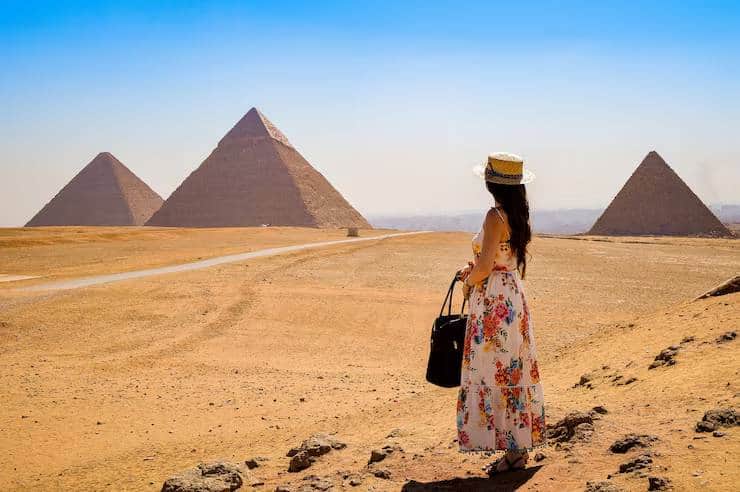
Egypt’s monuments span three thousand years, so the order you visit them in changes how the trip pans out. This post sets out an itinerary arranged by construction date, from Saqqara and Giza to Thebes, Edfu and Philae, with a seven-day plan and specific notes on heat and timing to be aware of.
Key Takeaways
- Saqqara predates Giza by about a century, so seeing it first shows how the pyramid design developed.
- Thebes belongs to a much later era than Memphis, with roughly a thousand years between them.
- Edfu and Philae were built under Greek rulers who copied far older temple plans.
- A seven-day plan fits Cairo, Luxor, and Aswan with one internal flight.
- Summer travel needs sunrise starts, while winter dates need earlier booking.
Most trips to Egypt get planned around the distance to be travelled. Cairo first, then a flight south, then whatever fits before the return. That works well enough. Another way to arrange the same stops costs nothing extra. Put the sites in the order they were built, and three thousand years of history reads forward instead of at random.
An Egypt travel itinerary arranged by date still covers the same ground. Giza, Luxor, Aswan, and Abu Simbel if the days allow. A local operator sets the sequence, books the internal flight and the site tickets, and keeps the pacing sensible. The order of the days changes, not the length of the trip or the price.
Where an Egypt Travel Itinerary Should Begin
Saqqara belongs before Giza. The Step Pyramid of Djoser went up around 2670 BC, and it stands as the oldest large stone building in the country. Giza followed about a century later, once the design had moved from stepped layers to smooth sides. In that order, the Great Pyramid reads less like a starting point and more like a result.
Then comes a long gap. The pharaohs of the New Kingdom ruled from about 1550 to 1070 BC, roughly a thousand years after Khufu, and they built at Thebes rather than Memphis. Karnak, Luxor Temple, and the royal tombs across the river all fall within that period. Tutankhamun sits near its middle, not at its start.
Edfu and Philae look older than they are. Both went up during the Ptolemaic period, between 305 and 30 BC, under Greek rulers who kept the old temple plans and carved them in hieroglyphs. Cleopatra belongs to that same era. Visiting these two last makes the borrowing easy to spot, and most guides will point it out along the way.
A Workable Order for a One Week Egypt Itinerary
- Days one and two in Cairo, with Saqqara and Dahshur seen before Giza.
- Day three at the Grand Egyptian Museum, where the Tutankhamun collection is held.
- Day four on a short flight to Luxor for Karnak and Luxor Temple.
- Day five on the west bank for the Valley of the Kings and Deir el Bahari.
- Days six and seven sailing to Aswan, with Edfu and Kom Ombo along the way.
- Abu Simbel as an add-on, usually flown from Aswan as a morning round trip.
Heat matters more than the calendar. Southern Egypt climbs above 100 degrees Fahrenheit from June through August, so summer visitors start at sunrise and rest through the afternoon. Winter is kinder on the body, though the sites fill up and cabins book out early. If your dates allow, aim for November or February.
Send your travel dates, the number of days you have, and the sites you want to see to a licensed operator. Ask for the order and the list. An itinerary that follows the dates gives you the same trip with a clearer thread running through it.